
Editorial Research Index
Institutional briefings & primary regulatory analysis
Financial analysis and briefings published by Offshore Firm Ledger.
20 matching briefings
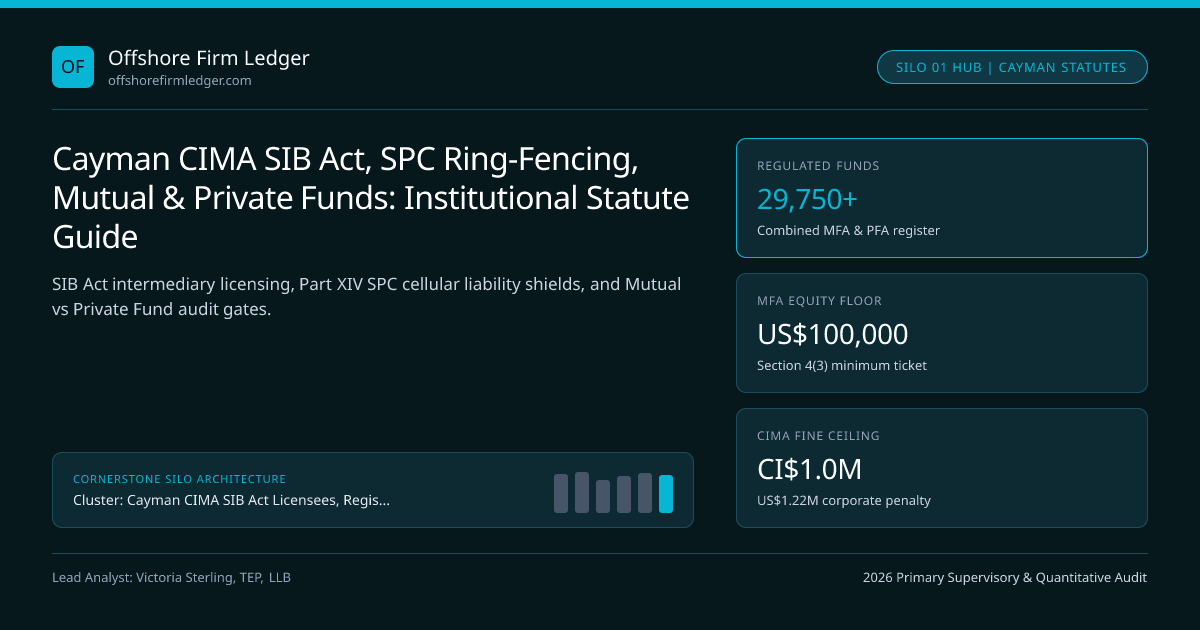
Cayman CIMA SIB Act, SPC Ring-Fencing, Mutual & Private Funds: Institutional Statute Guide
Under Cayman CIMA supervision, over 12,800 open-ended mutual funds and 16,900 closed-ended private funds operate alongside SIB Act dealers and Registered Persons subject to CI$1,000,000 administrative fine powers.
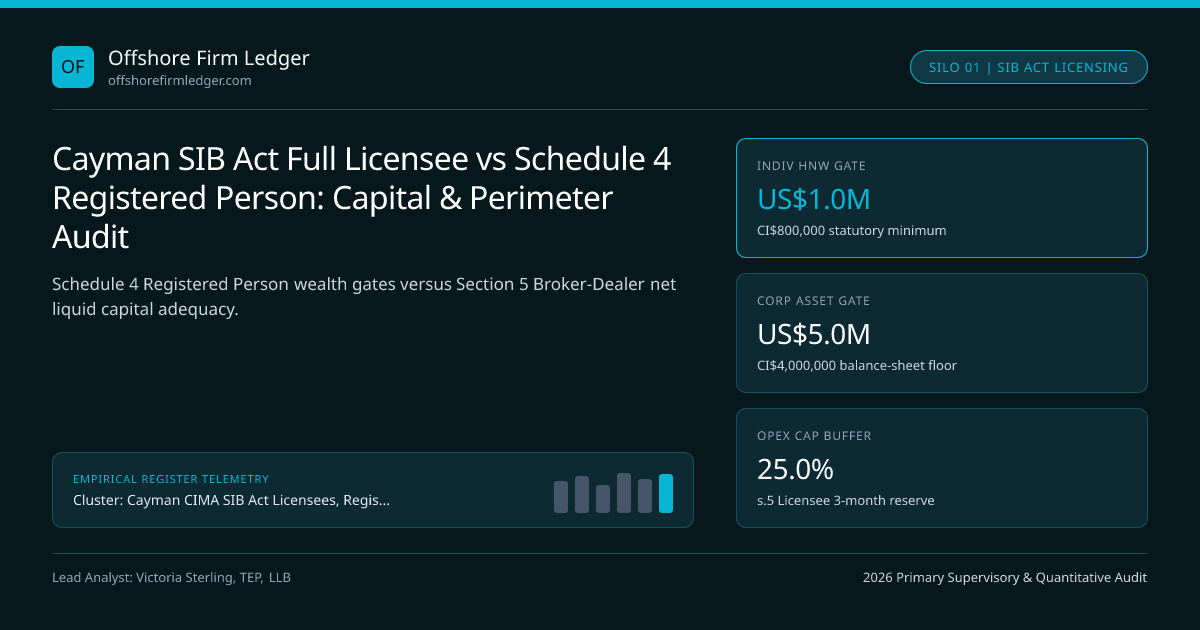
Cayman SIB Act Full Licensee vs Schedule 4 Registered Person: Capital & Perimeter Audit
Cayman SIB Act Schedule 4 Registered Persons restrict client onboarding to US$1M High Net Worth individuals or US$5M corporate entities, whereas retail dealing requires a full Section 5 offshore license.
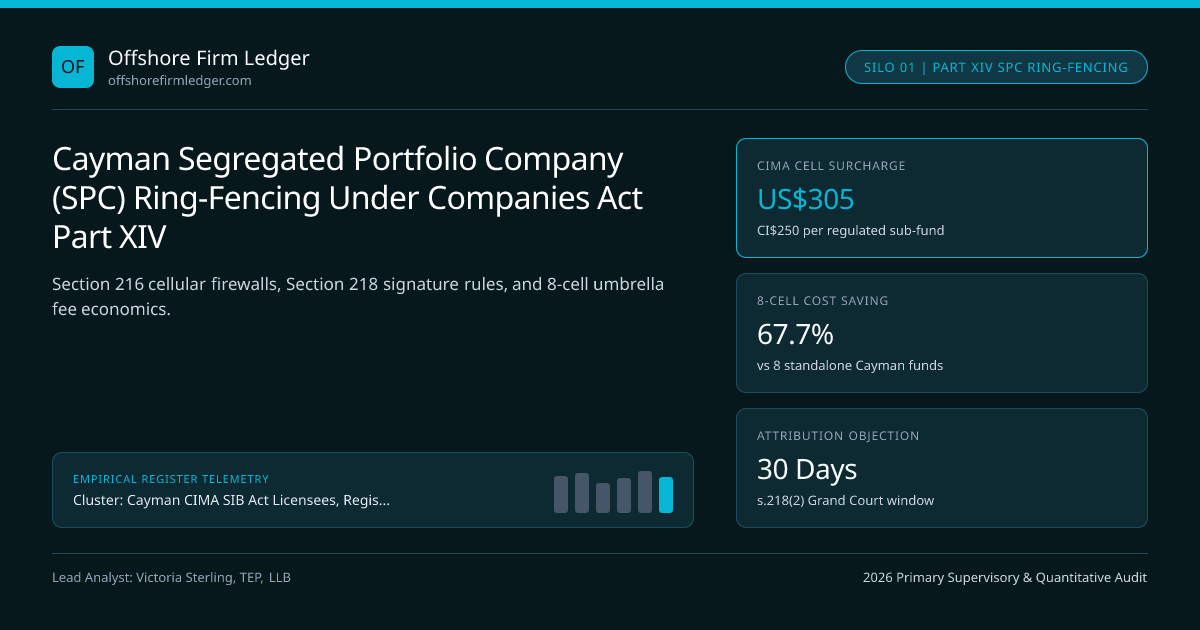
Cayman Segregated Portfolio Company (SPC) Ring-Fencing Under Companies Act Part XIV
Part XIV of the Cayman Companies Act enables a single Segregated Portfolio Company to launch statutorily ring-fenced hedge fund or private credit cells under Section 216 without forming separate corporate entities.
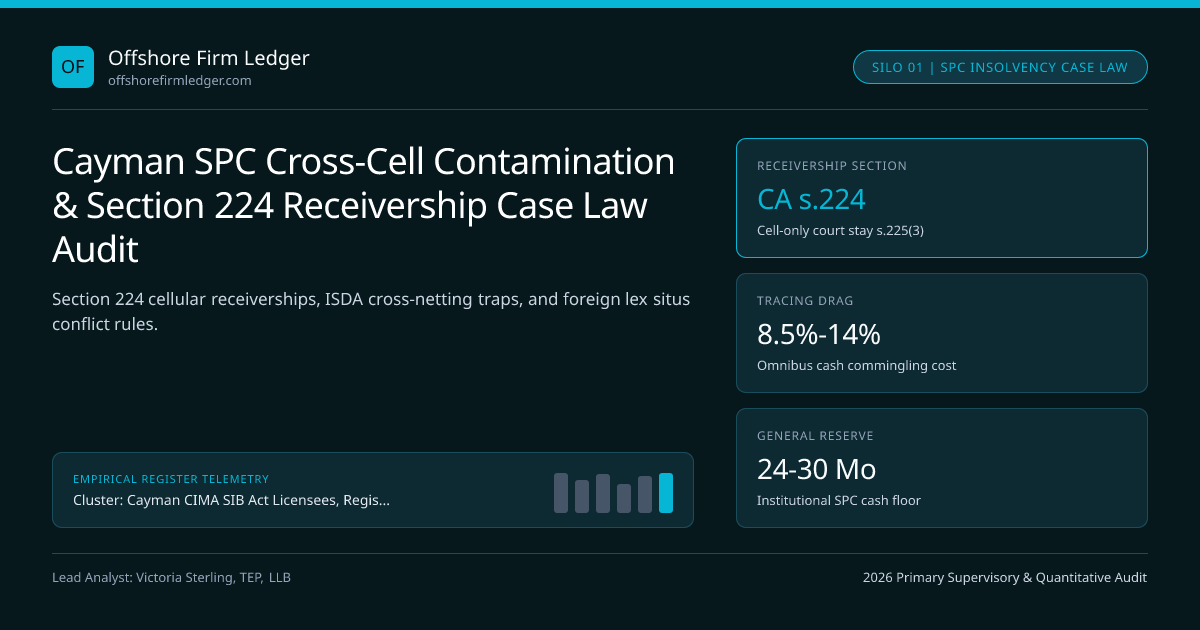
Cayman SPC Cross-Cell Contamination & Section 224 Receivership Case Law Audit
Cayman Grand Court rulings from ABC Company (SPC) v J & Co. to Performance Insurance confirm that an insolvent cell triggers a targeted Section 224 receivership order rather than winding up solvent sibling hedge fund cells.
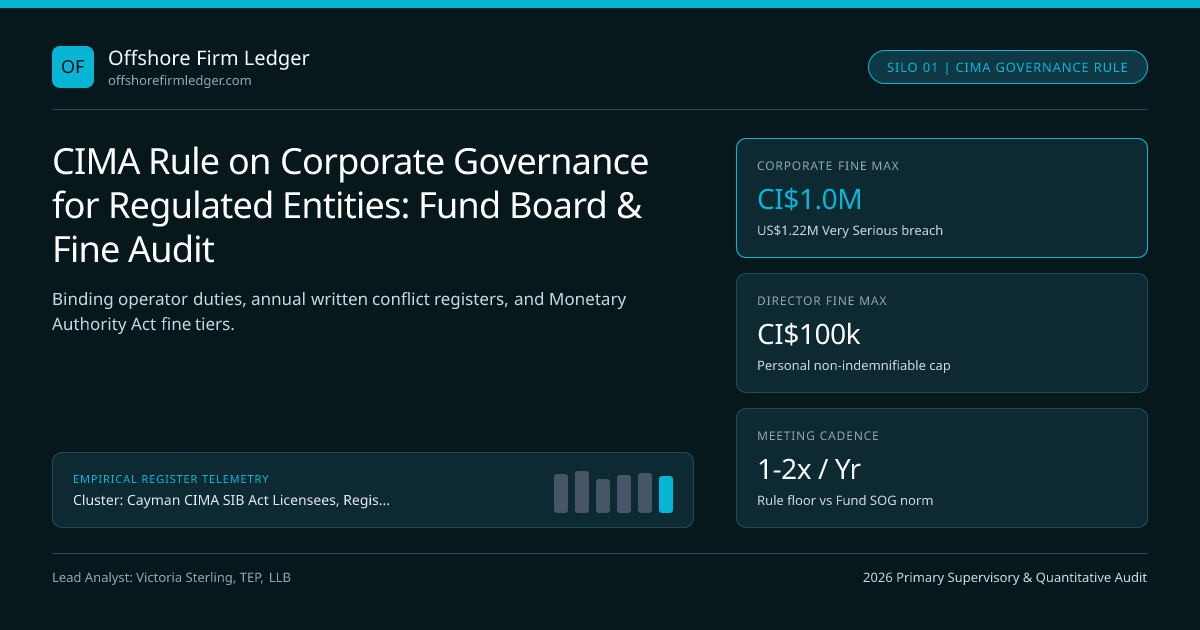
CIMA Rule on Corporate Governance for Regulated Entities: Fund Board & Fine Audit
Effective October 2023, the CIMA Rule on Corporate Governance converted voluntary fund board guidance into binding Cayman law backed by CI$1,000,000 corporate administrative fines across all Mutual and Private Funds.
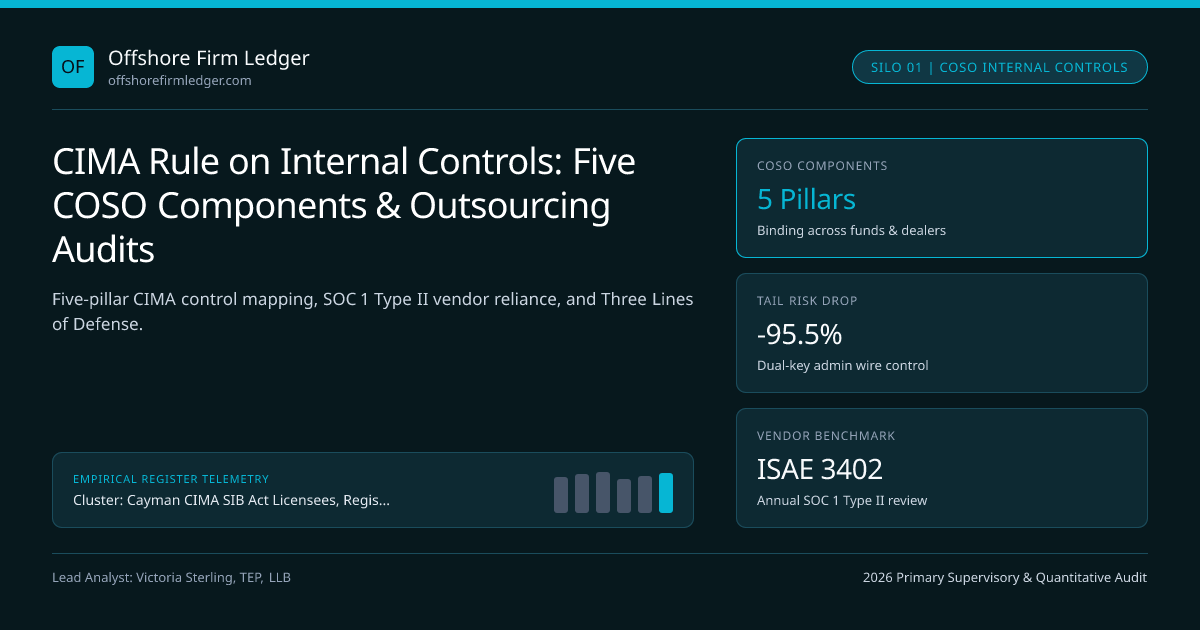
CIMA Rule on Internal Controls: Five COSO Components & Outsourcing Audits
Enforced alongside the Corporate Governance Rule, CIMA Rule on Internal Controls mandates five COSO-aligned control pillars across Cayman hedge funds, private equity GPs, and SIB Act offshore brokerages.
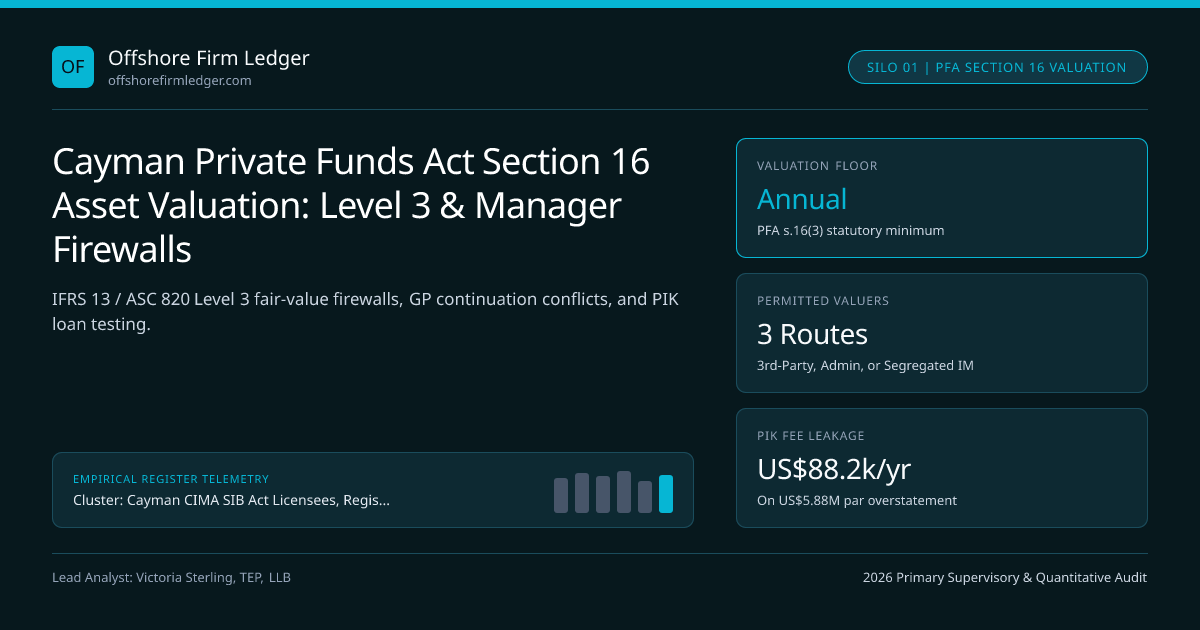
Cayman Private Funds Act Section 16 Asset Valuation: Level 3 & Manager Firewalls
Section 16 of the Cayman Private Funds Act requires annual fair-value valuation of illiquid private equity and private credit assets by an independent third party, administrator, or functionally segregated manager committee.
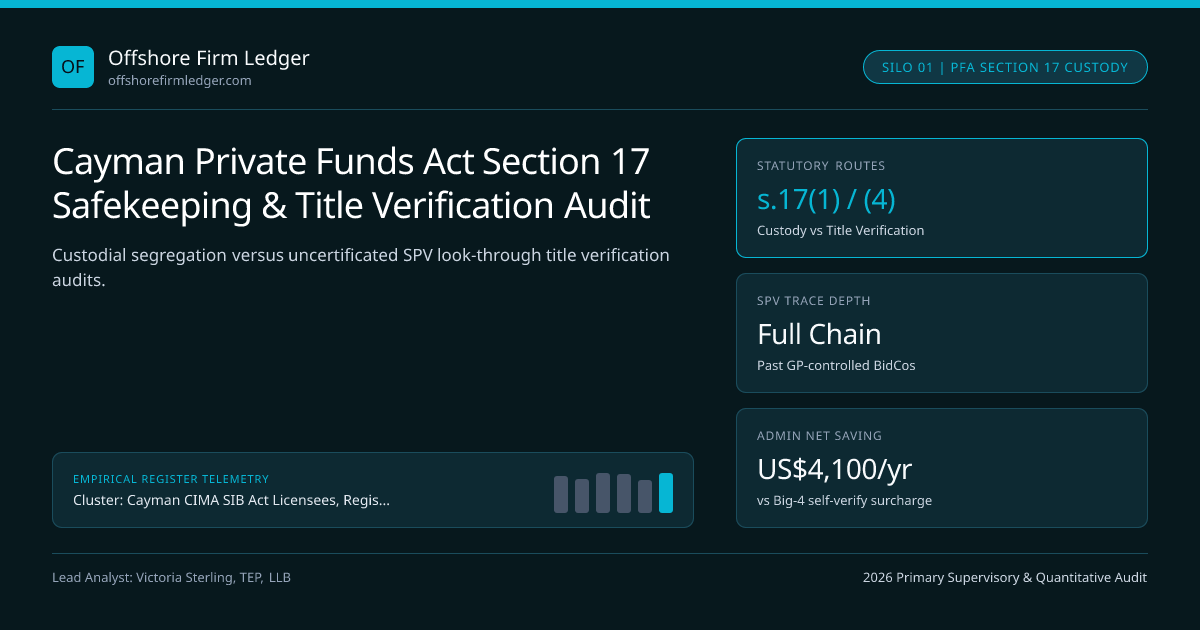
Cayman Private Funds Act Section 17 Safekeeping & Title Verification Audit
Section 17 of the Cayman Private Funds Act requires closed-ended funds either to appoint an independent custodian for financial instruments or enforce formal title verification over private equity shares and loans.
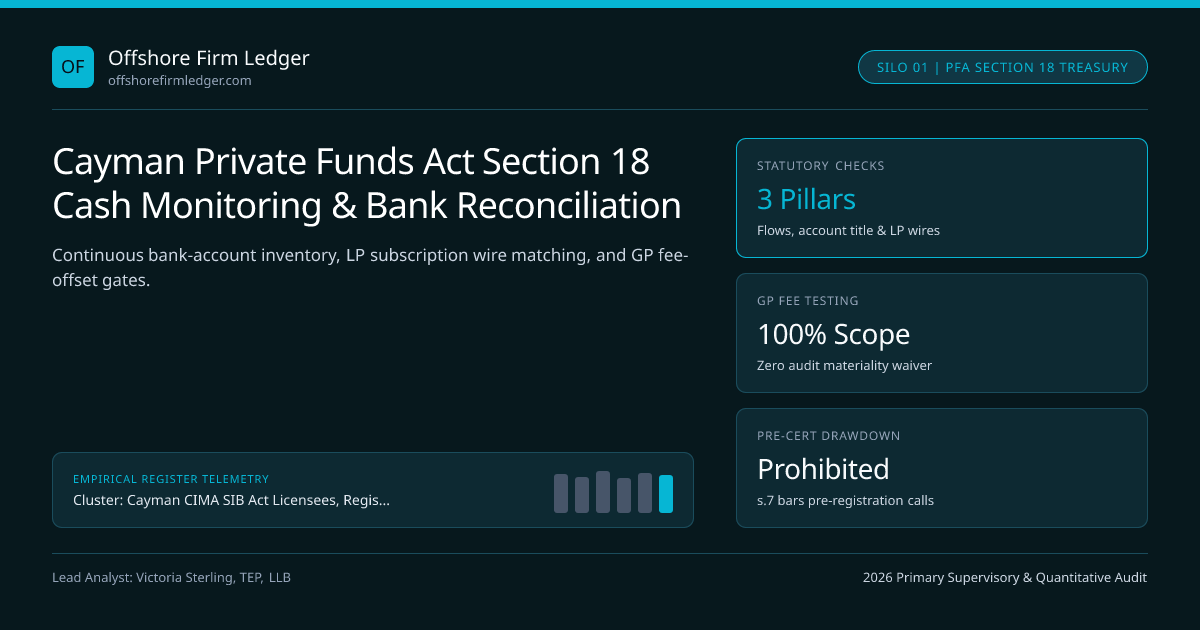
Cayman Private Funds Act Section 18 Cash Monitoring & Bank Reconciliation
Section 18 of the Cayman Private Funds Act mandates continuous monitoring of all subscription wires, capital calls, management fees, and waterfall distributions across every bank account opened in a private fund name.
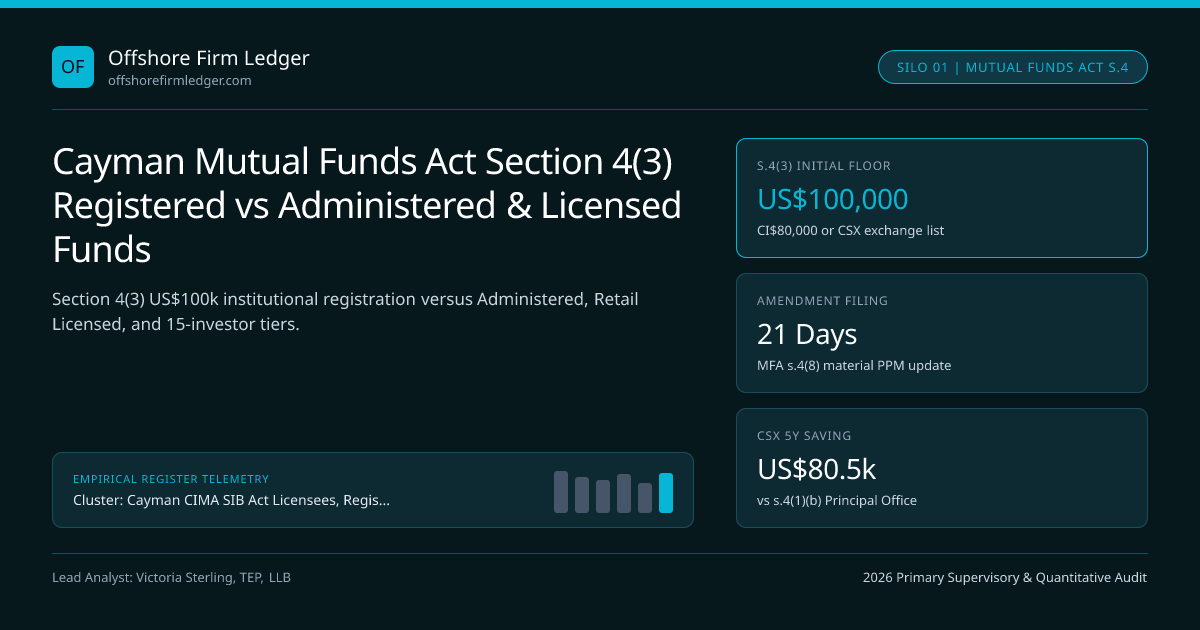
Cayman Mutual Funds Act Section 4(3) Registered vs Administered & Licensed Funds
Over 70% of open-ended Cayman hedge funds register under Mutual Funds Act Section 4(3) with a US$100,000 minimum initial equity ticket, bypassing retail licensing while accepting full CIMA audit oversight.
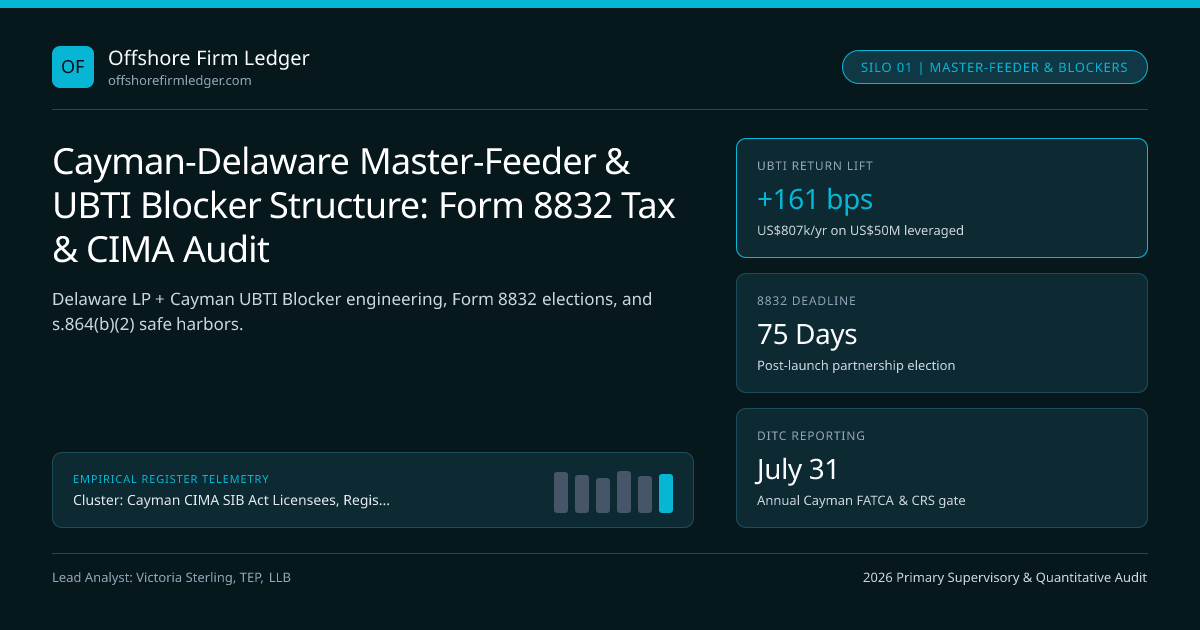
Cayman-Delaware Master-Feeder & UBTI Blocker Structure: Form 8832 Tax & CIMA Audit
Global hedge fund and private credit managers pair a Delaware LP onshore feeder with a Cayman Exempted Company offshore feeder and Form 8832 partnership Master Fund to block US UBTI and ECI tax leakage.
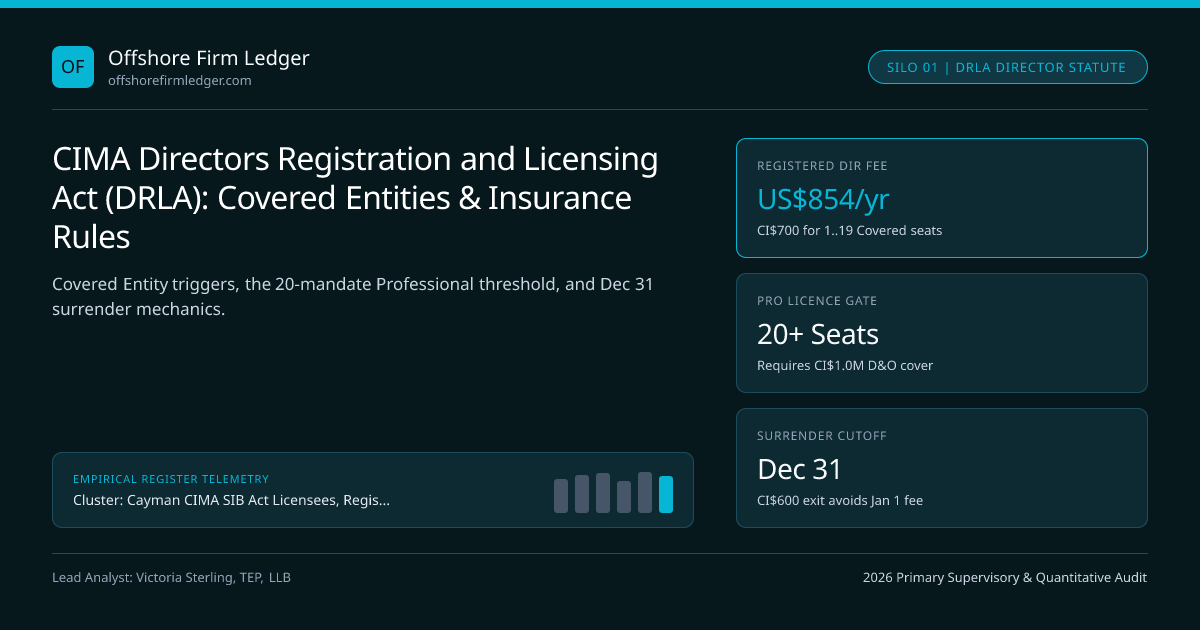
CIMA Directors Registration and Licensing Act (DRLA): Covered Entities & Insurance Rules
Every natural-person or corporate director appointed to a Cayman Section 4(3) Mutual Fund or SIB Act Registered Person must hold active CIMA DRLA registration or licensing prior to formal board appointment.
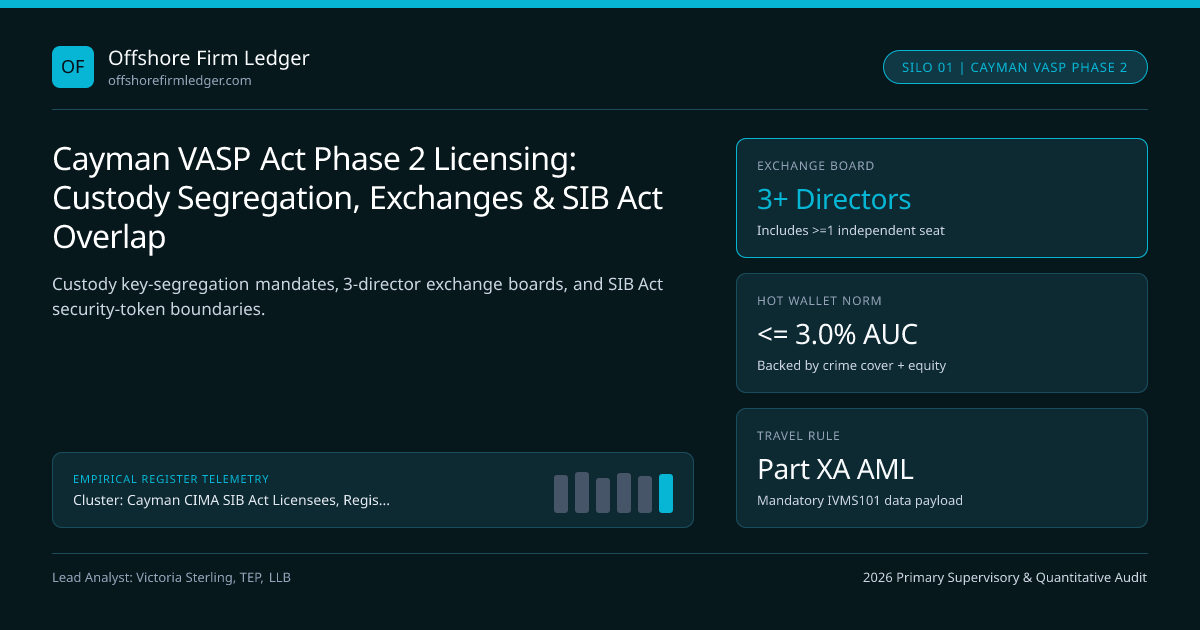
Cayman VASP Act Phase 2 Licensing: Custody Segregation, Exchanges & SIB Act Overlap
Phase 2 of the Cayman VASP Act requires virtual asset custodians and centralized trading platforms to transition from Phase 1 registration into full CIMA prudential licensing with segregated client-key custody.
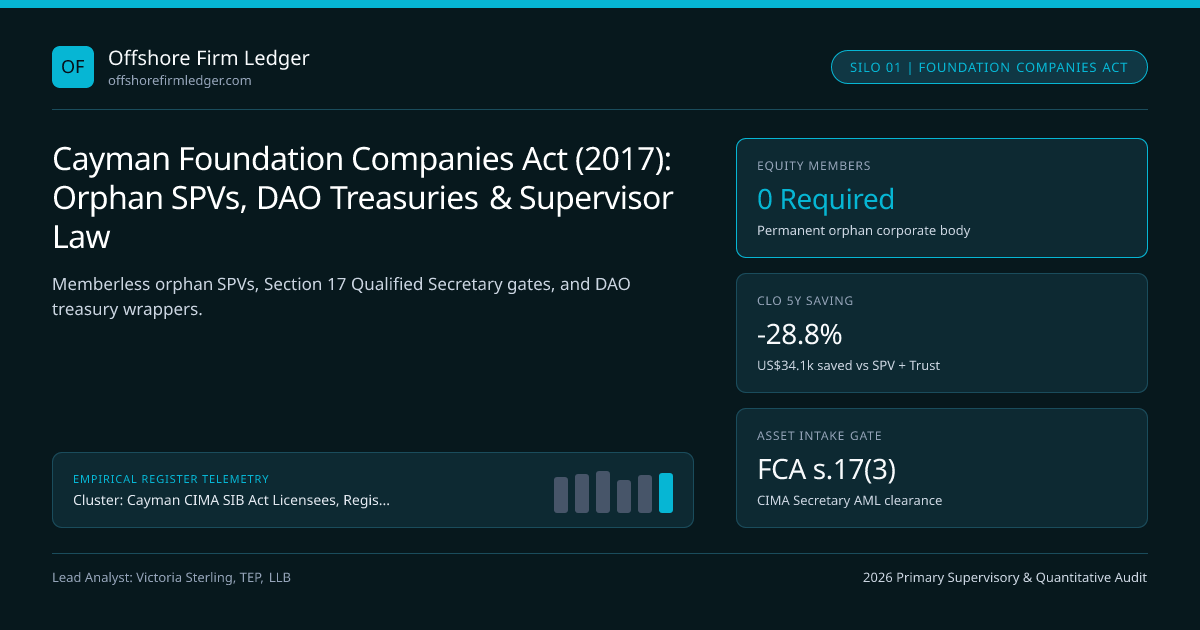
Cayman Foundation Companies Act (2017): Orphan SPVs, DAO Treasuries & Supervisor Law
Under the Cayman Foundation Companies Act, a body corporate can permanently cease to have shareholders while retaining Companies Act limited liability, creating an ideal orphan wrapper for securitizations and protocol treasuries.
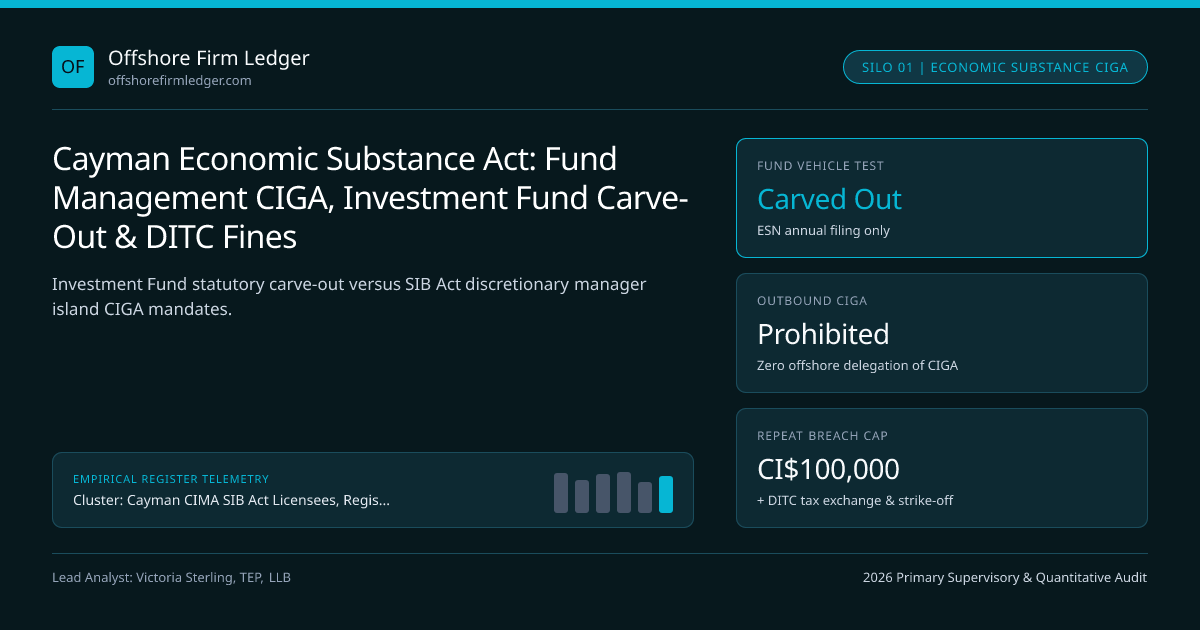
Cayman Economic Substance Act: Fund Management CIGA, Investment Fund Carve-Out & DITC Fines
Under the Cayman Economic Substance Act, regulated Investment Funds are statutorily carved out from Relevant Entity scope, whereas Cayman SIB Act discretionary fund managers must satisfy strict island CIGA tests.
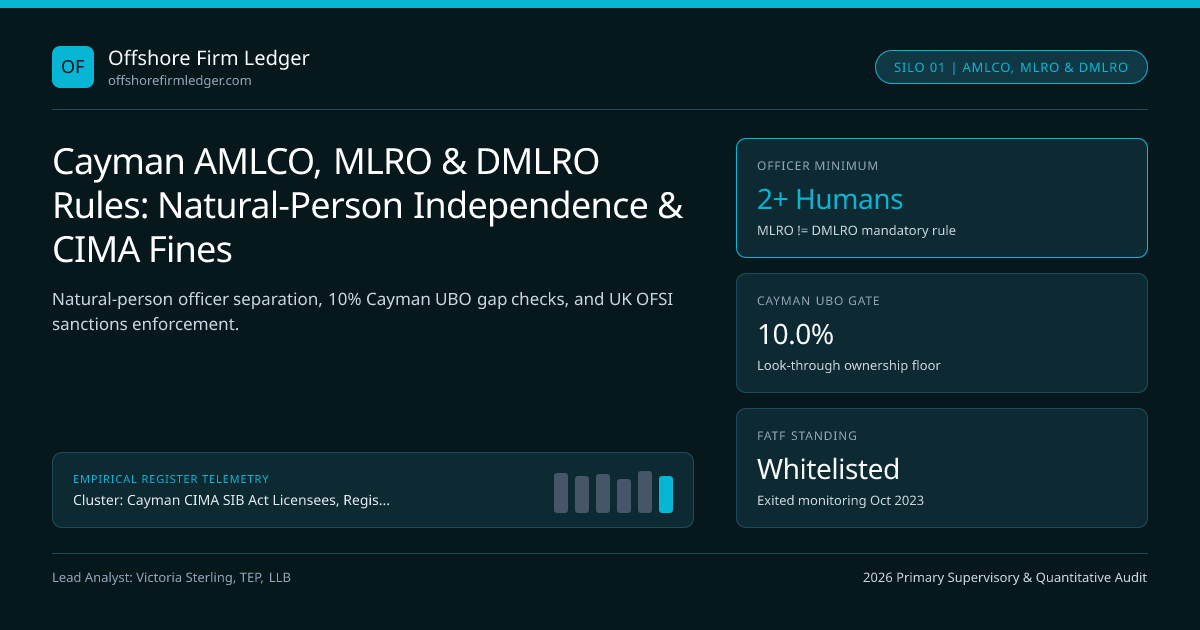
Cayman AMLCO, MLRO & DMLRO Rules: Natural-Person Independence & CIMA Fines
Every Cayman Mutual Fund, Private Fund, SIB Act intermediary, and VASP must appoint named natural persons as AMLCO, MLRO, and DMLRO with strict separation preventing the MLRO and DMLRO from being the same individual.
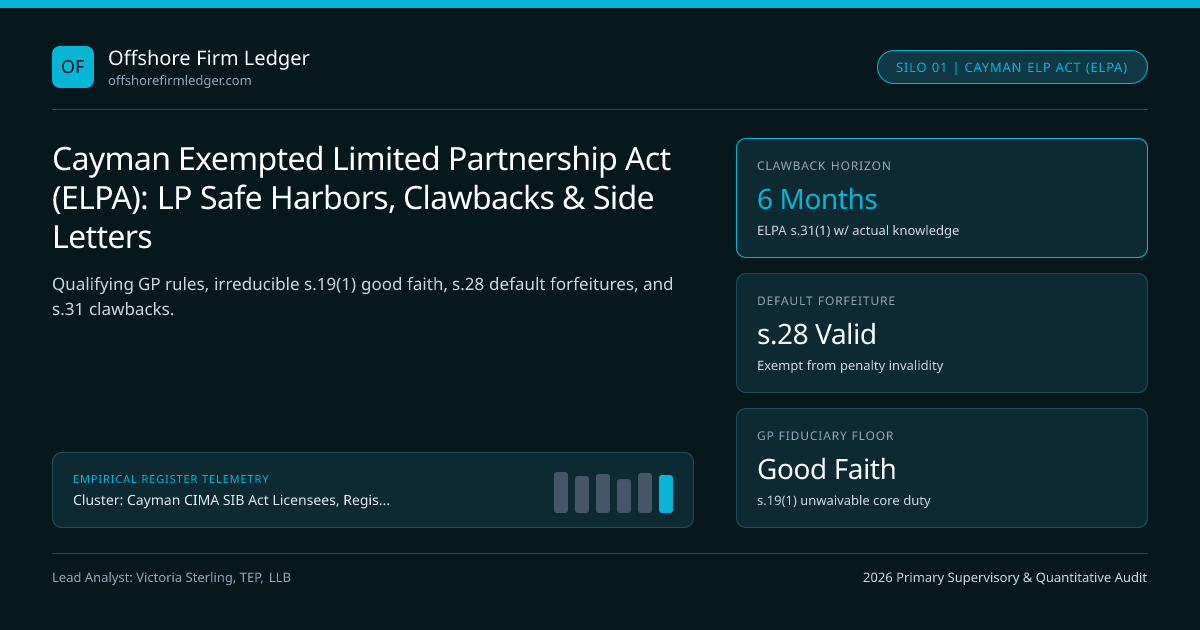
Cayman Exempted Limited Partnership Act (ELPA): LP Safe Harbors, Clawbacks & Side Letters
Over 85% of closed-ended Cayman private equity and private credit funds organize under the Exempted Limited Partnership Act, pairing Delaware-style contractual freedom with strict Section 31 insolvency clawback rules.
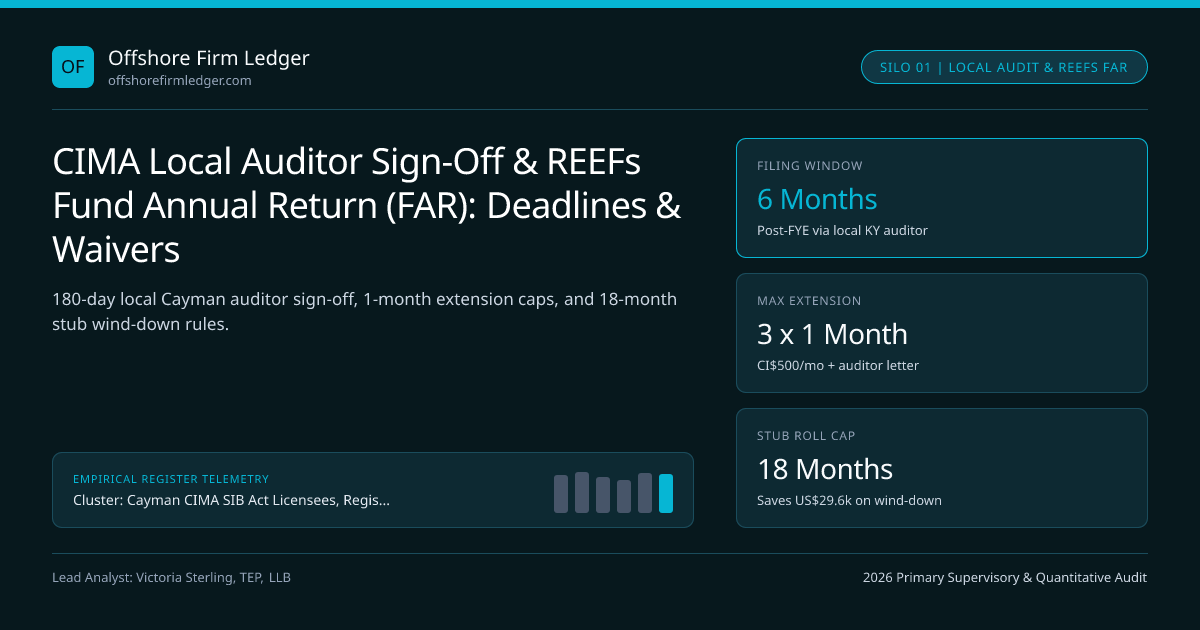
CIMA Local Auditor Sign-Off & REEFs Fund Annual Return (FAR): Deadlines & Waivers
Every Cayman Mutual Fund and registered Private Fund must have its annual financial statements signed off by a CIMA-approved local Cayman audit office and submitted with a Fund Annual Return within 6 months of year-end.
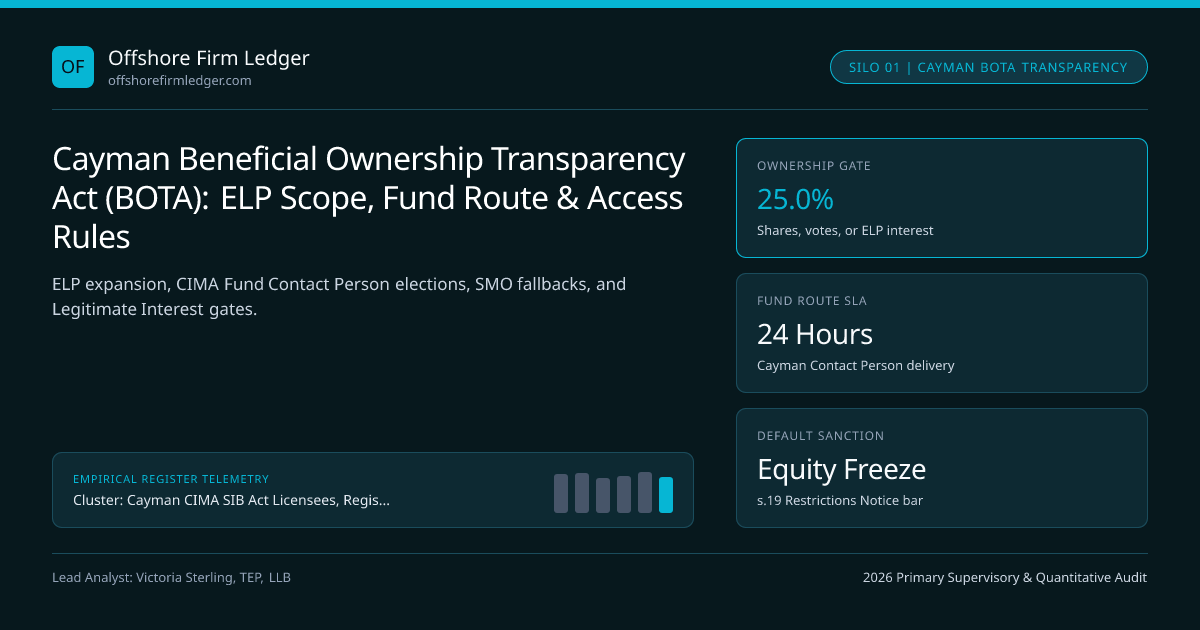
Cayman Beneficial Ownership Transparency Act (BOTA): ELP Scope, Fund Route & Access Rules
Enacted to unify beneficial-ownership rules across Cayman companies, LLCs, Foundation Companies, and Exempted Limited Partnerships, BOTA introduces an alternative Contact Person route for CIMA-regulated funds and Legitimate Interest access.
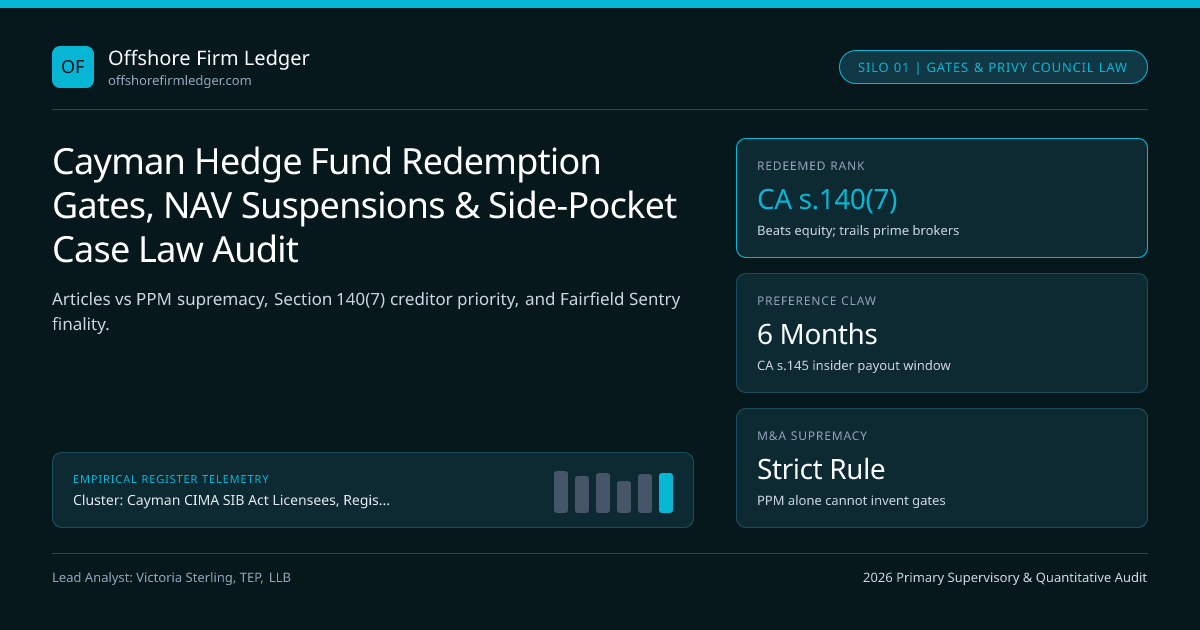
Cayman Hedge Fund Redemption Gates, NAV Suspensions & Side-Pocket Case Law Audit
Privy Council rulings from Culross Global SPC v Strategic Turnaround to Pearson v Primeo establish exact statutory boundaries on when a redeeming Cayman hedge fund investor becomes an unsecured creditor under Section 140.